

Medicine Made Easy!
Get our Video Notes, Study Guides, and More!
Helping Healthcare Students & Professionals Succeed
With Our Book, Flashcards, Study Guides, Lectures, Videos and More!
What People Are Saying

“I received my book and am certainly pleased with my purchase. I really like the colorful pages, simplified explanations, and memorable integration of high yield concepts. This will help me study for my medical board exams. Thanks again and wish your team all the best!”
— Taunjah (True Customer)
Book & Flashcards
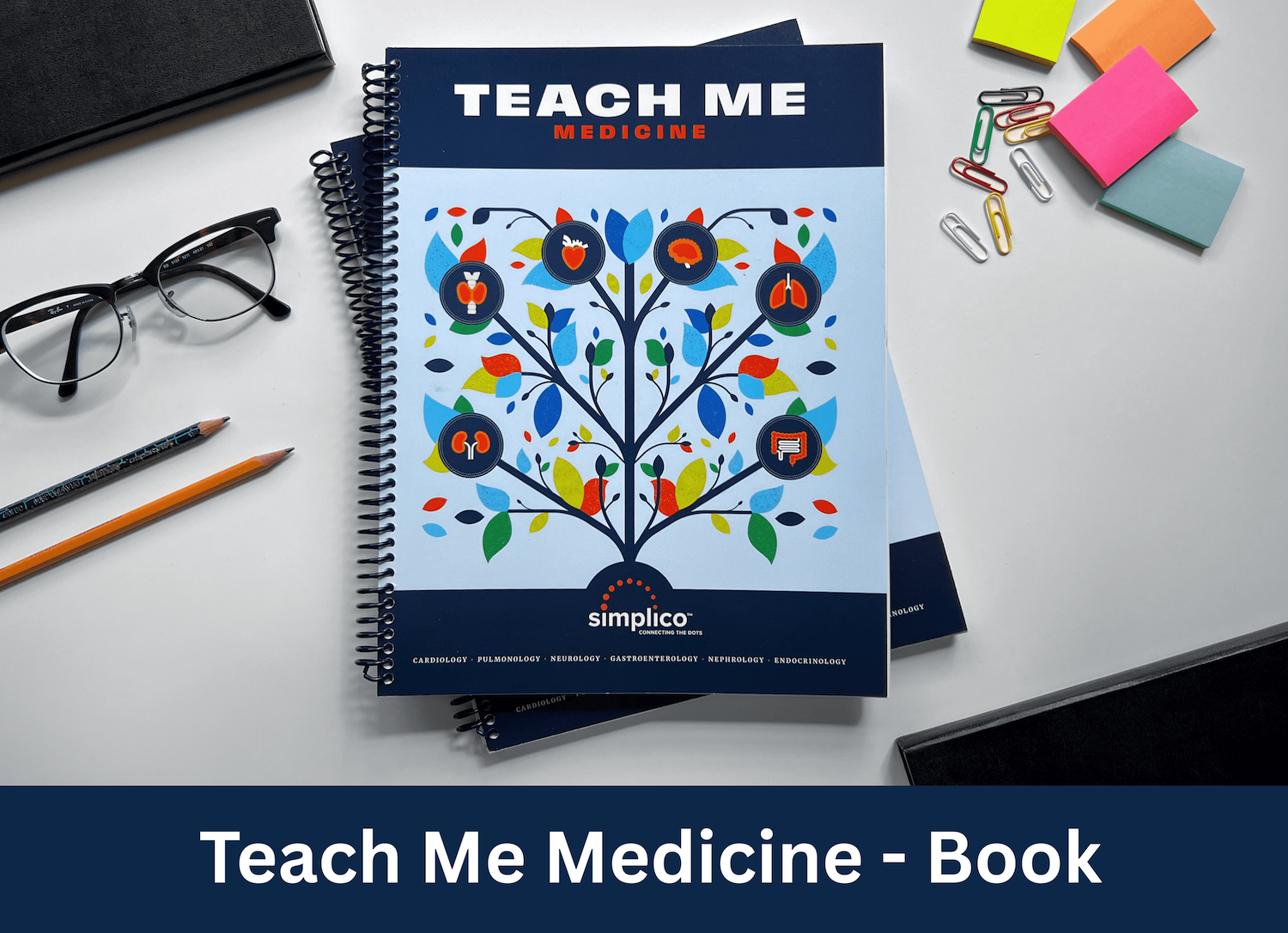
Discover our bestselling textbook and flashcards—packed with memory tricks and modern teaching methods to improve retention and boost knowledge. Designed for efficient studying to help you excel.
🚚 2-3 Day Shipping!
🔍 Master Medical Topics with Ease:
Say goodbye to overwhelming textbooks! “Teach Me Medicine” simplifies complex topics with easy-to-understand explanations and powerful memory tricks to help you retain key concepts.
🧠 Memory-Boosting Mnemonics & Visuals:
Learn faster with clever memory tricks and vibrant illustrations that make even the toughest medical topics and processes stick.
📚 Streamlined, Need-to-Know Content:
Concise—essential information tailored for quick learning and exam preparation. Get exactly what you need to succeed in your studies, ace your exams, and excel in your career.
🎨 Engaging, Visual Learning Experience:
Full of colorful charts, diagrams, and illustrations, this book turns dry medical information into an interactive learning experience that brings content to life.
🚀 Ideal for All Stages of Your Medical Journey:
Whether you're a student, intern, or seasoned professional, “Teach Me Medicine” is the perfect tool for quick revision, exam prep, or refreshing your knowledge.
Why Choose “Teach Me Medicine”?
Save Time Studying: Focus on the most relevant, high-yield information.
Master Medical Topics: Simple explanations to improve understanding.
Boost Retention: Effective techniques to improve memory recall.
Portable & Practical: Lightweight design for on-the-go learning—perfect for busy professionals.
Get Your Copy Today & Master Medicine Faster and Smarter!

Save Time Studying & Ace Your Exams!
📘 All-in-One Learning Powerhouse:
Includes the “Teach Me Medicine” book + 3 essential flashcard sets:
Teach Me Medicine - Textbook
Medical Terminology - Flashcards
Medical Abbreviation - Flashcards
Pharmacology Antidote - Flashcards
🎁 Exclusive VIP Savings:
Get everything you need at a discounted bundle price—more value, less cost.
🧠 Built for Better Memory:
Each resource uses effective memory tricks, mnemonics, and visual cues to help concepts stick.
✍️ Clear, Concise Explanations:
Complex topics are broken down into easy-to-understand explanations—perfect for quick learning and long-term retention.
🎯 High-Yield Focus:
Covers what to know for exams, classes, clinical prep, and career application—while reinforcing key concepts.
🚀 Ace Your Exams & Clinicals:
Build a solid foundation with high-yield content trusted by students and educators.
💡 Study Smarter, Not Harder:
Designed for those who want to learn efficiently and effectively while optimizing retention.
👉 Perfect for pre-med, medical students, nursing, EMTs, pharmacy, and allied health students and professionals—get the VIP today and invest in your future!
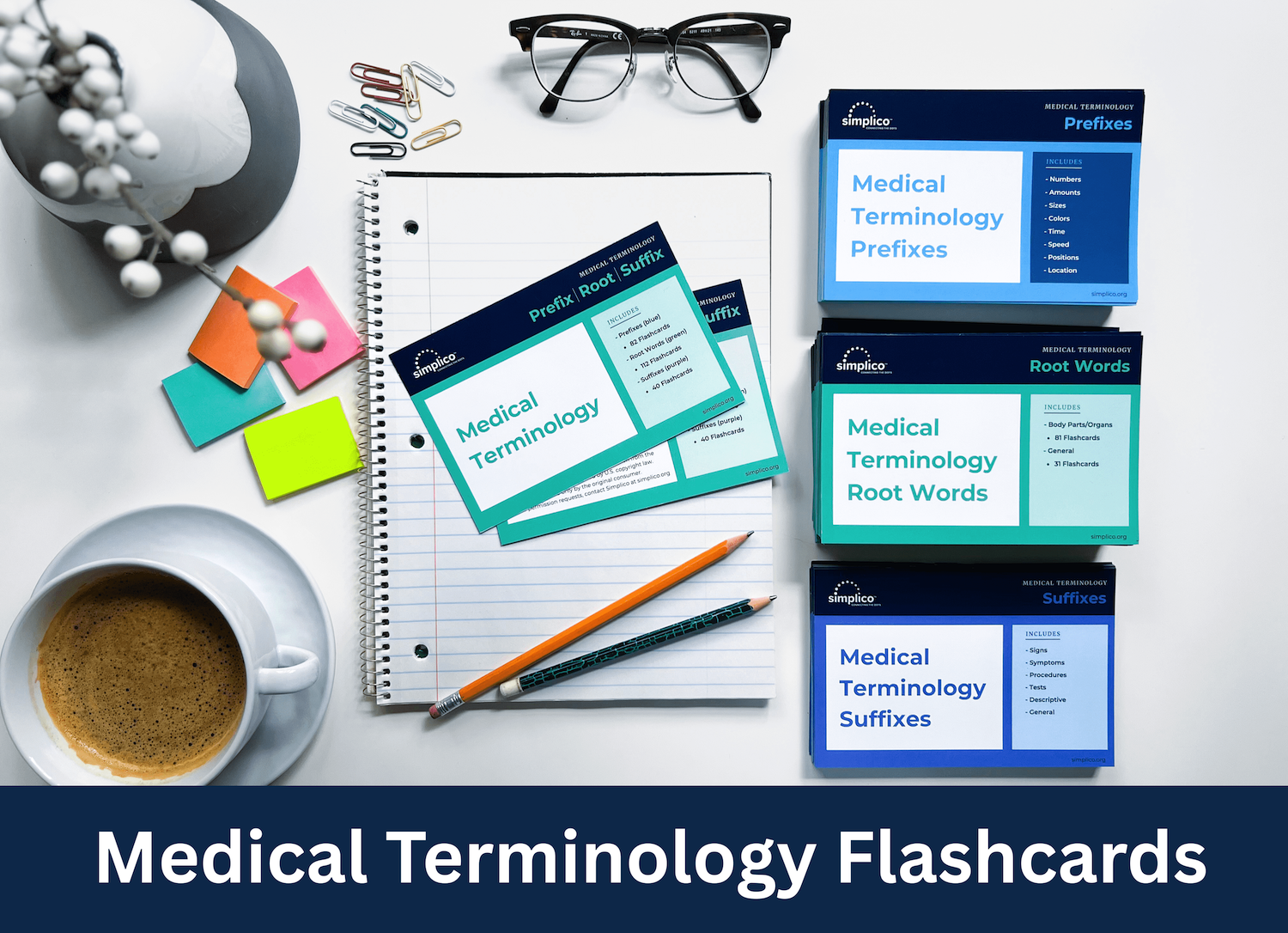
Great for Nursing, Med Students, EMTs, Coding, and More!
239 Premium Cards!
Full Bundle - Prefixes, Roots, Suffixes!
Memory Tricks on Each Card!
📚 Complete Set:
Includes medical prefixes, root words, and suffixes
Prefixes (anatomy - position, location; sizes, amounts, numbers, etc.)
Root Words (body parts, organs, general, useful for anatomy, etc.)
Suffixes (signs, symptoms, procedures, tests, general, etc.)
💡 Clear Definitions:
Concise and easy-to-understand definitions of key medical terms.
🧠 Memory Tricks:
Mnemonics and hacks to help retain complex terms.
🎨 Memory Images:
Visual aids and illustrations linked to each term to reinforce learning and boost retention.
🔍 Real-life Examples:
Practical examples showing how terms are used in medical contexts.
🌎 Comprehensive Coverage:
A wide range of medical terms from anatomy, pathology, procedures, and more.
🚗 Portable & Convenient:
Ideal for on-the-go study or quick review. Perfect for exam prep, clinical practice, and more.
🚀 Designed for All Levels:
Perfect for students, professionals, or anyone looking to expand their medical vocabulary.

Boost Your Knowledge & Excel in Medicine!
📚 Efficient Learning:
Covers the most commonly used medical abbreviations across healthcare settings.
🧠 Boost Recall:
Reinforces memory retention through active recall.
⏱️ Time-Saving:
Quickly review key terms on-the-go; perfect for class, exam prep, clinical rounds, or shifts.
💡 Study Smarter:
Flashcard format makes memorization fast, efficient, and portable.
🗂️ Organized & Streamlined:
Grouped by category for targeted review (e.g. charting, medications, pharmacy, anatomy, etc.).
🔍 Clinical Confidence:
Learn to recognize and interpret abbreviations in charts, prescriptions, and reports.
🎓 For All Levels:
Ideal for medical students, nurses, EMTs, and all health professionals and learners.
🚗 Easily Portable:
Study anytime, anywhere—perfect for the busy lifestyle.

Ace Your Exams & Excel in Medicine!
💡 Effective Learning:
Instantly recall key antidotes for toxins and drug overdoses—vital for your exams and clinical settings.
🧠 Memory-Boosting Design:
Includes clever memory tricks and visual aids to learn key concepts faster.
⏱️ Fast Review Format:
Perfect for rapid-fire studying before exams, rotations, or shifts.
📚 Exam & Board Prep:
Ideal for USMLE, NCLEX, NAPLEX, and medical/nursing school tests.
📋 Study Tips & Notes:
Each card includes high-yield study tips, usage pearls, and need-to-know information.
📸 Memory Images:
Vivid, easy-to-remember visuals that turn complex info into lasting mental snapshots.
🚗 Easily Portable:
Study on-the-go—simple for anytime access.
Get All Our Digital Study Guides & Video Notes!
Join for $1 for the first month - Discount applied at checkout!
Sign up below for instant access to online study guides and video notes to master core concepts and ace exams. Study smarter with high-yield resources for nursing and medical learners.

Get instant online access to our growing collection of courses, study guides, and resources! Try it out for $1.00 the first month - Discount applied at checkout!
What Others Think
Our unique teaching style combines memory tricks, vivid visuals, and simple explanations to make complex concepts stick — helping students and professionals learn faster and perform better.
“I have been in EMS for almost 20 years and have been in EMS education for about 6 years. This is the best explanation of GCS and how to memorize it that I have seen.”
— Jay
(simplico user)
“Absolutely fantastic thank you so much. Really impressive and easy way to learn!”
— Ben
(simplico user)
“As a visual learner and a short attention span this is a life saver for anyone going to EMT school.”
— John
(simplico user)
What Most People Do
We offer a wide range of study materials. Here are the most popular options people take:
Order our top-selling “Teach Me Medicine” book

Become a member to access our study guides
Order our flashcard sets full of memory tricks
Browse our library of lectures and videos
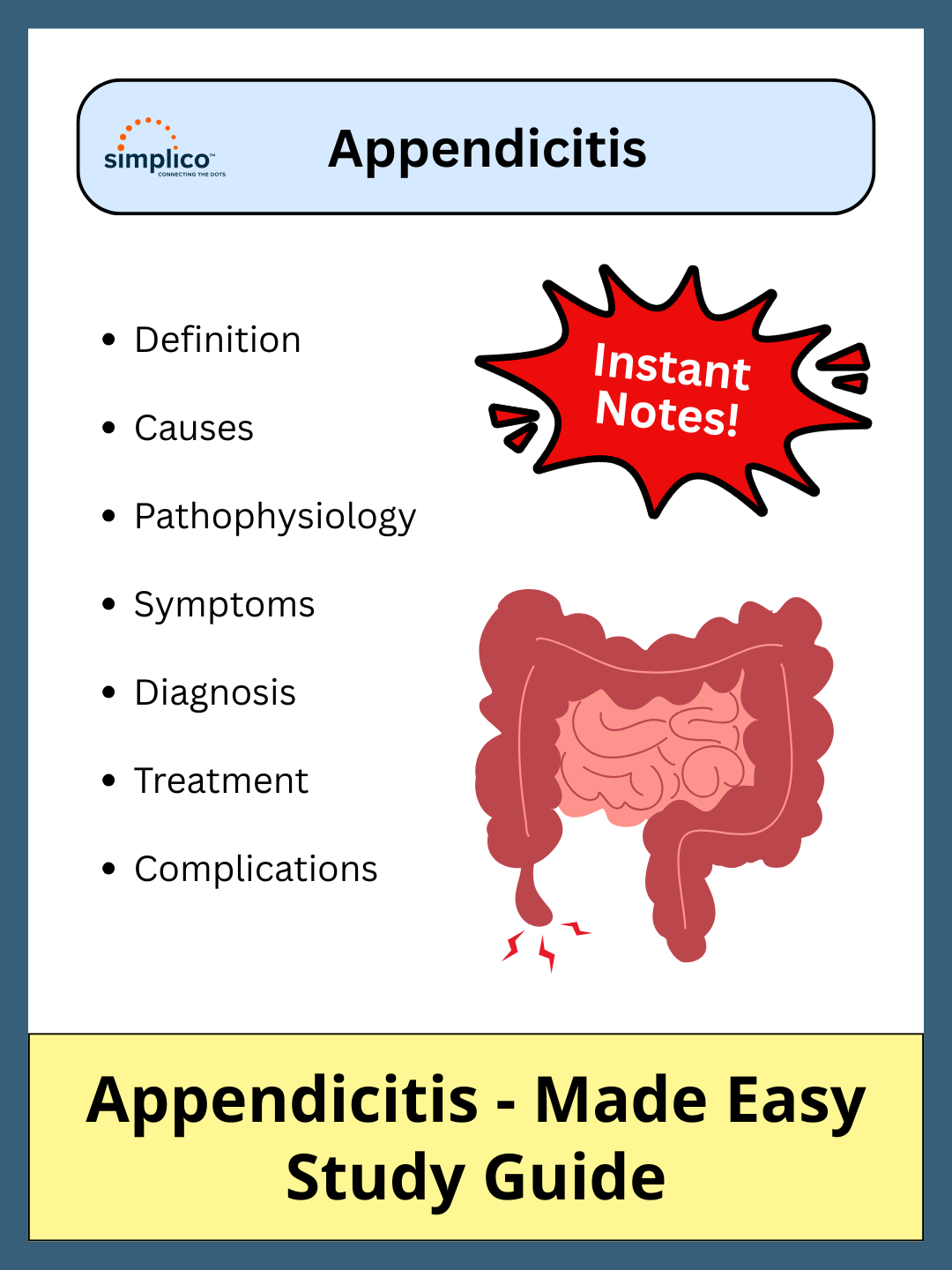
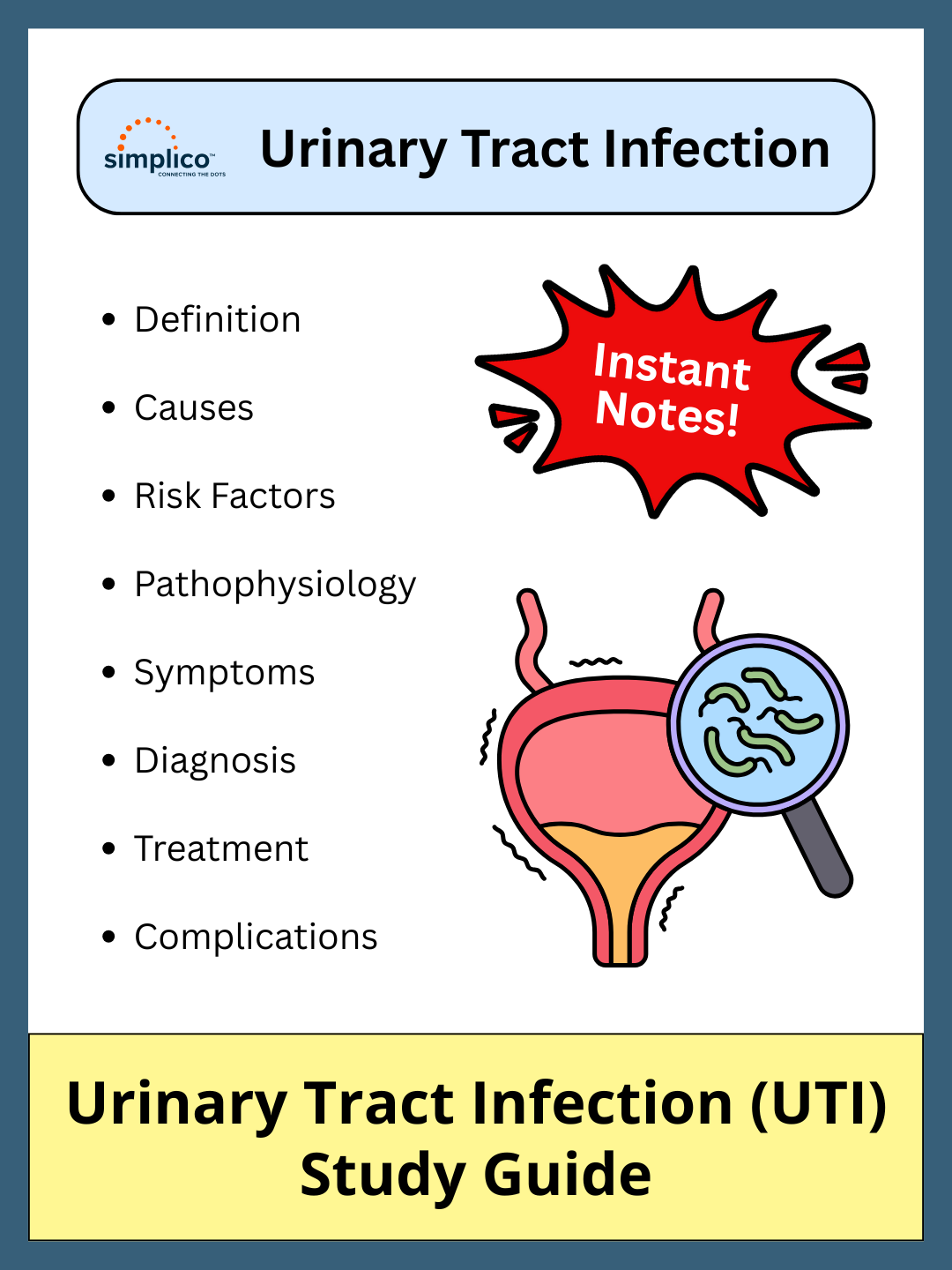
Popular Study Guides
Popular Lectures
Angiotensin II Receptor Blockers (ARBs): Examples, Mechanism of Action, Side Effects
Angiotensin II receptor blockers (ARBs) made easy. ARBs drug list, example medications, side effects, mechanism of action (MOA), indications, contraindications, and more. ARBs vs ACE inhibitors explained. The renin-angiotensin-aldosterone system, angiotensin II effects, and MEMORY TRICKS included.
ACE Inhibitor Medications: Drug List, Mechanism of Action, Side Effects
ACE inhibitor medications made easy! ACE inhibitor drug list, mechanism of action, side effects (angioedema, cough), examples, contraindications, indications, and more! Review of the renin-angiotensin-aldosterone system, angiotensin II effects, and MEMORY TRICKS included!
Antihypertensive Medication Chart: Drug List, Classes, and Examples
Antihypertensives made easy! Antihypertensive drug list, medications, classes, examples, names, mechanism of action for treating high blood pressure (hypertension), and more! Includes a chart and memory tricks for ACE inhibitors, ARBs, alpha blockers, beta blockers, calcium channel blockers, and diuretics.

Types of Shock: Distributive, Hypovolemic, Cardiogenic, Obstructive - Chart
Types of shock including cardiogenic, distributive, hypovolemic, and obstructive. Definition, causes (occurs when), examples, symptoms, pathophysiology, treatment (management) reviewed. Shock types chart (table) and MEMORY TRICK for EMTs, nursing, EMS, medical students, and more included.

Beta Adrenergic Receptors: Types, Function, and Location
There are 2 main types of adrenergic receptors: alpha and beta. When activated by catecholamines, they will generate a sympathetic response. The beta receptors are the focus of this lecture. Easily learn the different beta adrenergic receptor types, where they are located, and the effects they have when activated. Includes illustrations, simple explanations, and easy memory tricks to remember the content.

Alpha Adrenergic Receptors: Types, Function, and Location
There are 2 main types of adrenergic receptors: alpha and beta. When activated by catecholamines, they will generate a sympathetic response. The alpha receptors are the focus of this lecture. Easily learn the different alpha adrenergic receptor types, where they are located, and the effects they have when activated. Includes illustrations, simple explanations, and easy memory tricks to remember the content.

Blood Pressure Regulation: Hypotension - Easy as 1-2-3
The body has 2 main compensatory mechanisms to regulate blood pressure and improve hypotension: the sympathetic nervous system and the renin-angiotensin-aldosterone system. How they increase blood pressure is as easy as 1-2-3, a memory trick that can be used to remember the content. Learn what this trick means and how it applies to the compensatory mechanisms to improve blood pressure. The physiology is easily explained using step-by-step diagrams.
Secondary Hemostasis Steps: Coagulation Cascade Pathway
Secondary hemostasis and the coagulation cascade made easy. Step-by-step guide of the coagulation cascade pathway and secondary hemostasis. Includes diagrams, ppt images, and mnemonics to remember the common, intrinsic, and extrinsic pathways. Review of anticoagulants, disorders, and more!
Primary Hemostasis: The Platelet Plug Steps and Diagram
This step-by-step guide walks you through primary hemostasis and the formation of a platelet plug. Learn this memory trick to remember the primary hemostasis pathway. Includes diagrams and practical applications great for nursing, NCLEX, USMLE, and more!
Tricks to Remember Normal Lab Values: Nursing Chart, NCLEX Cheat Sheet
Easy tricks to remember the normal lab values for common blood tests! Includes CBC, chemistry, LFTs, ABG, and coagulation studies. Great for nursing, NCLEX, USMLE, and all healthcare students and professionals! Charts and cheat sheets included!
Congenital Heart Disease: Cyanotic Defects Made Easy
Congenital heart diseases made easy! Use this simple counting trick to remember the main cyanotic congenital heart defects. Includes explanations, causes, and symptoms of tetralogy of Fallot, transposition of great arteries, truncus arteriosus, tricuspid atresia, and more! Great for students, nursing, USMLE, NCLEX, and all medical learners!
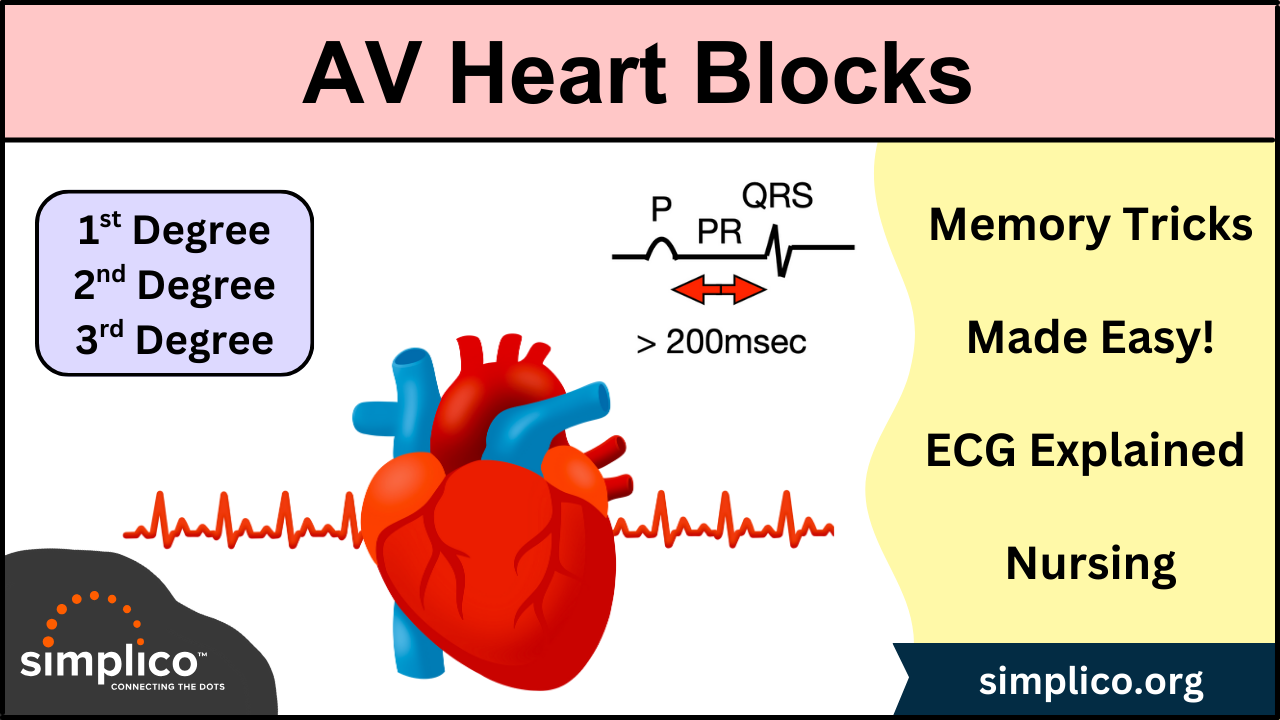
Heart Block Poem: 1st, 2nd, 3rd Degree Types and ECG Rhythm Explained
Use this simple poem to remember the different types of AV heart blocks along with their EKG rhythm. Examples of first-degree, second-degree, and third-degree heart blocks provided. Includes brief overview of the cardiac conduction system as well. Great for nursing, USMLE, and all medical learners!
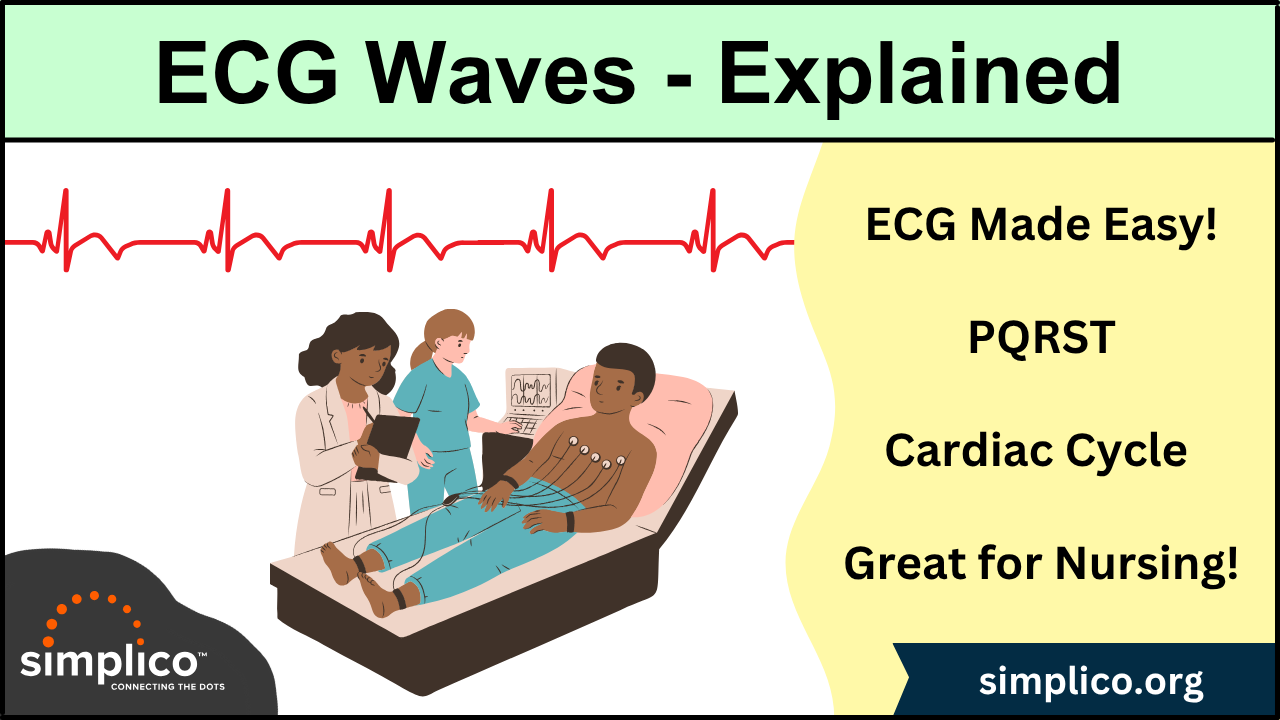
ECG Waveform Explained: Labeled Components
Easily learn the different parts of an EKG (ECG) waveform and how it correlates with the conduction system of the heart! Simple step-by-step guide that walks you through an EKG wave. Discusses the P wave, PR interval, QRS complex, ST segment, T wave, TP segment, and what they mean!
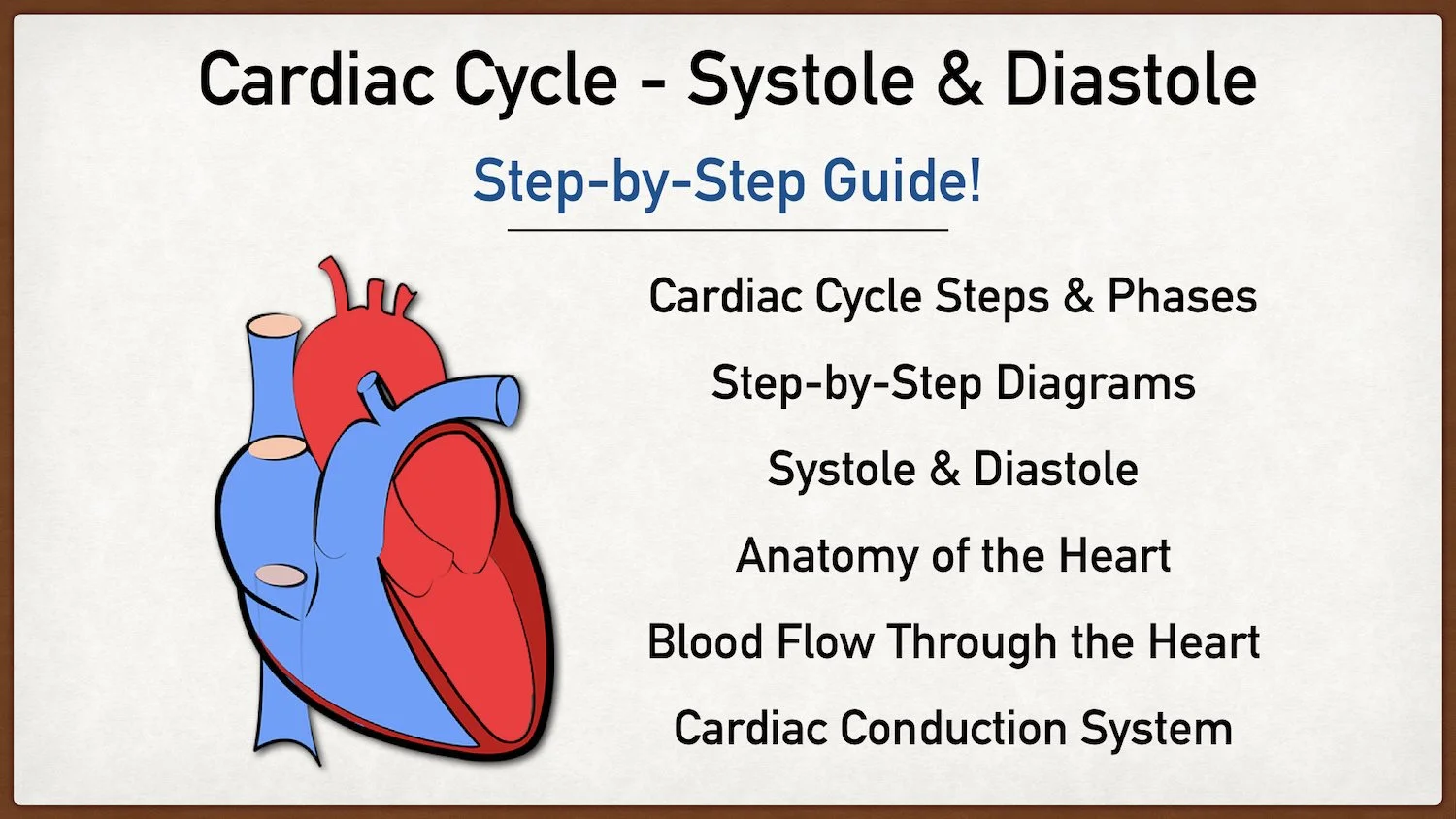
Cardiac Cycle Phases: Systole and Diastole Step-by-Step Diagram
Easily learn the cardiac cycle of the heart using this step-by-step guide! Includes information about the anatomy of the heart, blood flow through the heart, and the conduction system. Cardiac physiology made easy!
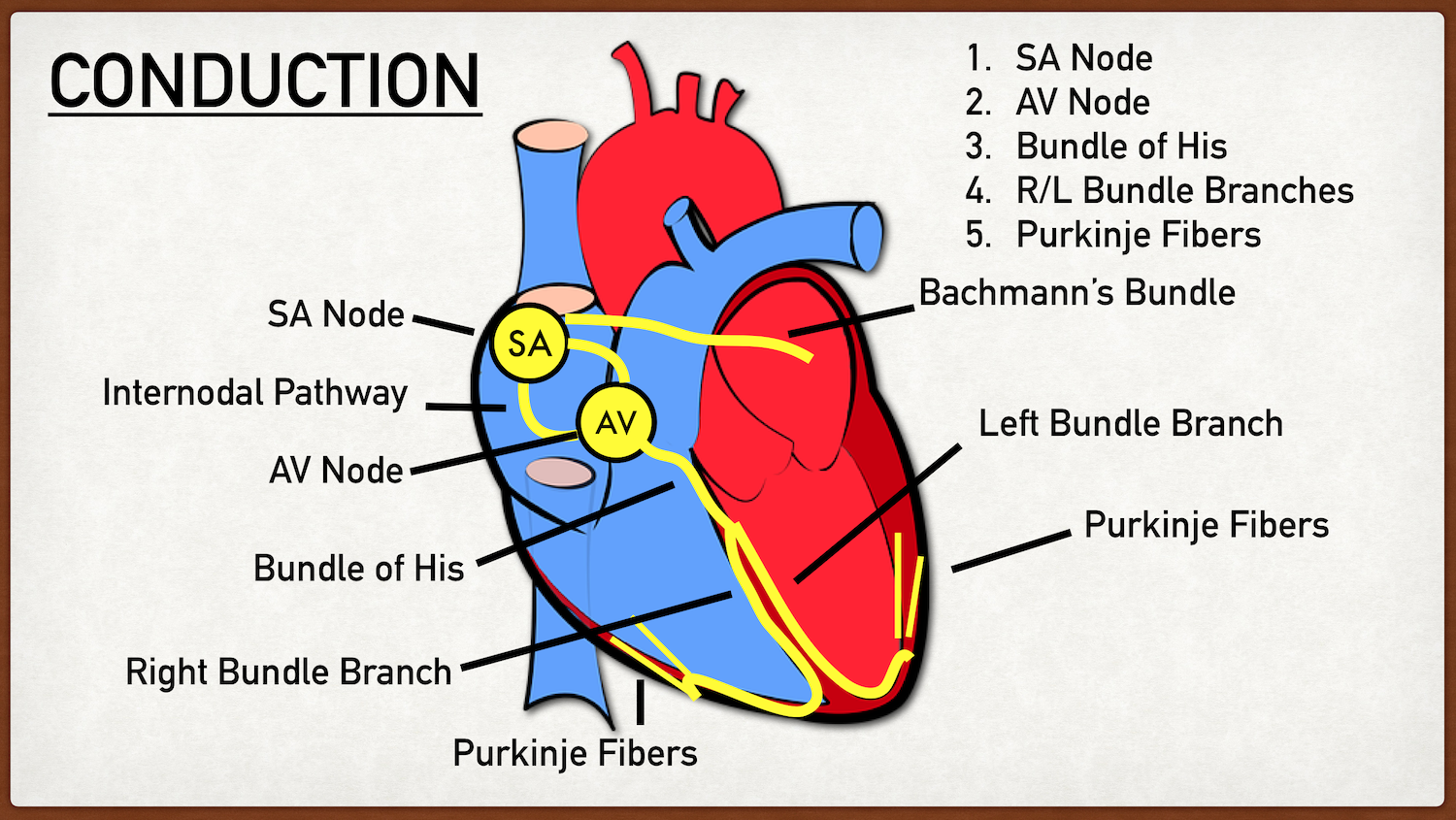
Conduction System of the Heart: The Electrical Pathway
This simple step-by-step guide walks you through the conduction system of the heart! Learn about the SA node, AV node, bundle of His, bundle branches, and Purkinje fibers. Includes discussion about pacemaker cells and the anatomy of the heart as well!
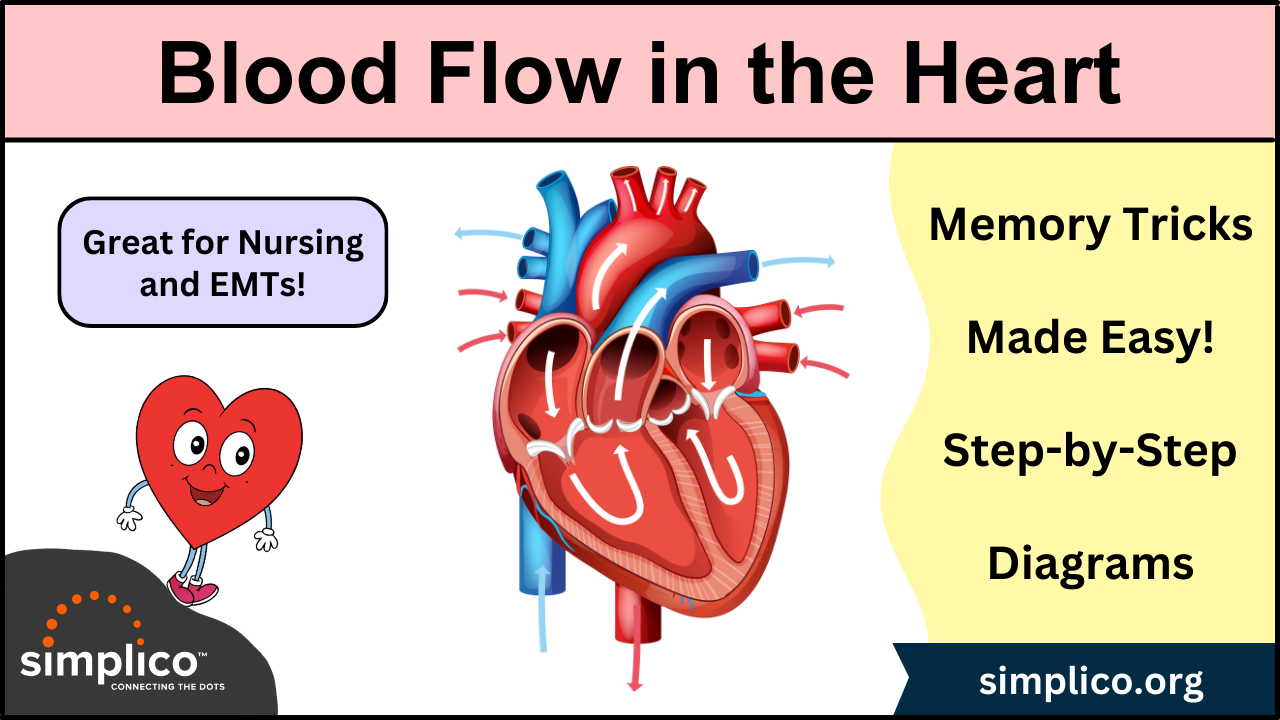
Blood Flow Through The Heart: A Simple 12 Step Diagram
Blood flow through the heart made easy! Using a simple 12 step diagram of the heart, we walk through the cardiac circulation pathway in order! Includes a video and animation to quiz yourself and test your knowledge!
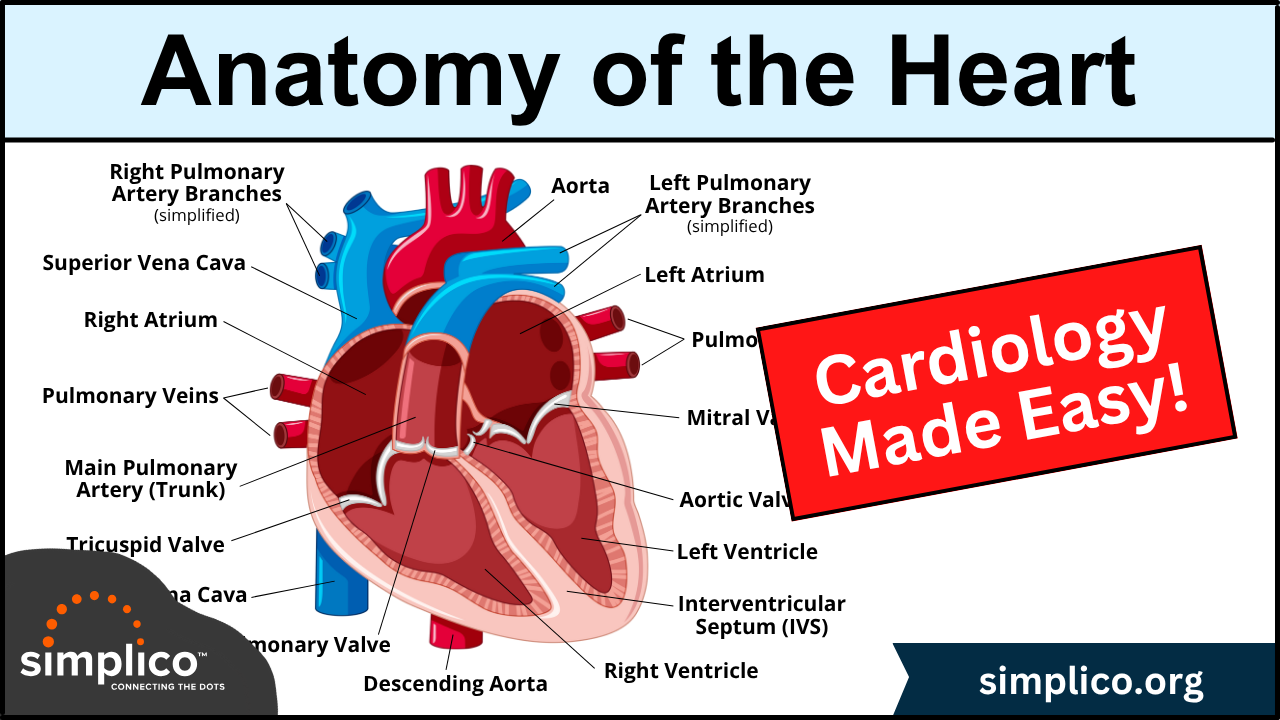
Heart Anatomy: Labeled Diagram, Structures, Function, and Blood Flow
Anatomy of the heart made easy using labeled diagrams of the main cardiac structures! We discuss the anatomy and function of the atria, ventricles, heart valves, and major blood vessels including the aorta, pulmonary arteries and veins, and the superior and inferior vena cava. Includes a review of the blood flow through the heart as well!

ICD-10-CM Medical Coding: Ischemic Heart Diseases
ICD-10-CM codes SIMPLIFIED! Medical coding for ischemic heart disease and chapter-specific coding guidelines for atherosclerotic coronary artery disease and angina, along with myocardial infarctions (MIs) reviewed! Perfect for medical coding and billing! Practice cases and examples included!

How to Place a 5-Lead ECG: Electrode Placement Explained
5 Lead ECG: Placement explained using an acronym mnemonic to remember the location of the electrodes and colored lead wires! Diagrams included! 5 lead ECGs are used for cardiac monitoring and telemetry, and knowing where to place the lead wires is important. Great for nursing, paramedics, EMTs, students, and more!
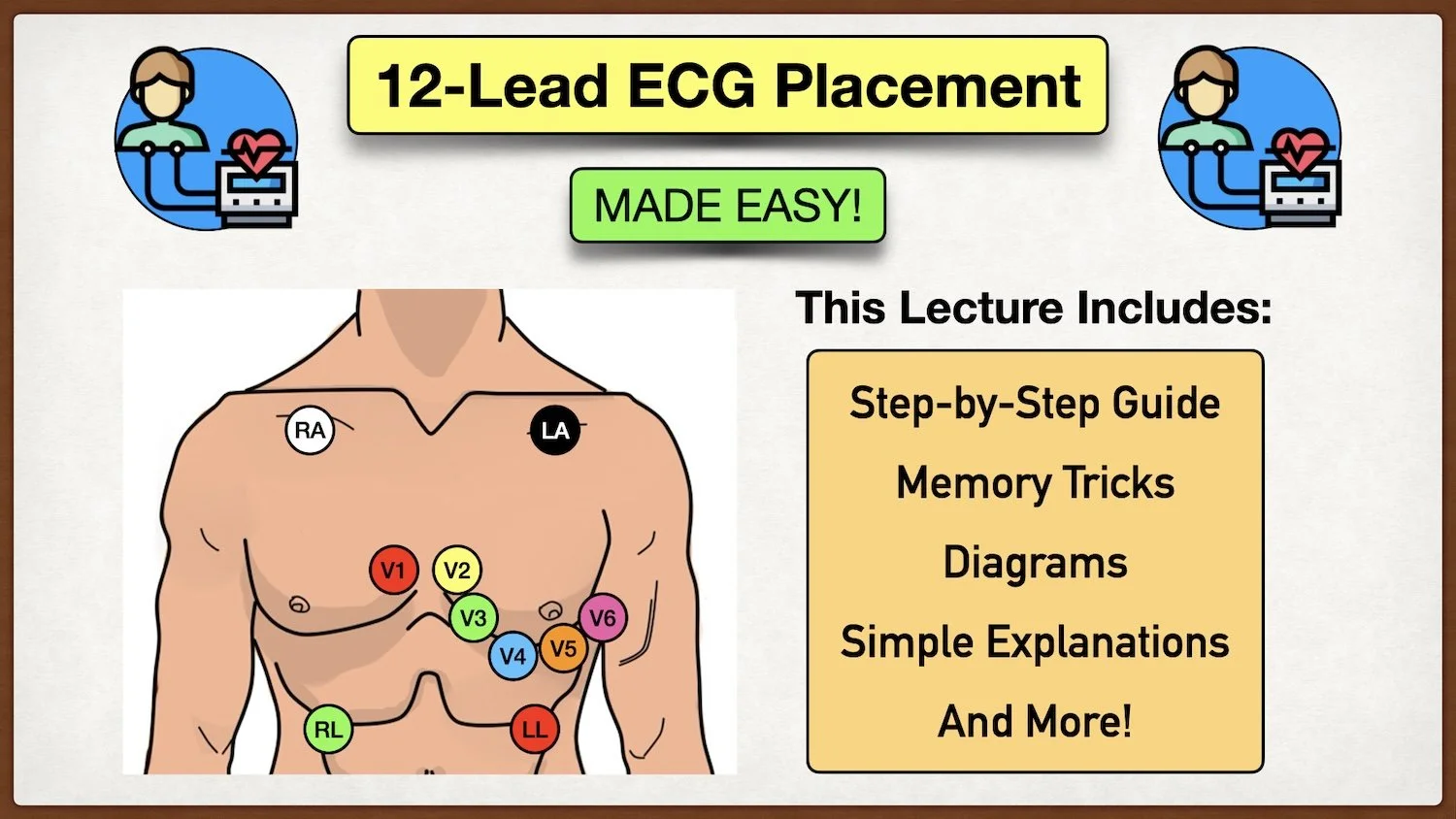
How to Place a 12-Lead ECG: Electrode Location & Chart
12-Lead ECG placement MADE EASY for nursing, EMTs, EMS, students, and more! Mnemonic to remember limb and precordial electrode and lead wire locations, positions, and colors! Step-by-step diagrams, colorful pictures, and simple charts included!
Instant Access:
Get instant anytime access to a growing library of notes, study guides, cheat sheets, and exclusive content!
Includes:
Memory tricks, simple explanations, high-yield content for exams, and more!
Personal membership account
Unlimited access
Click below to learn more!